
Story Hook
That first thrifted find was a chipped white enamel pitcher I rescued from a flea market the spring we moved into a tiny rental with squeaky floors and a bare living room, and it suddenly felt like home.
The small rituals of arranging wildflowers in that pitcher and layering a soft throw over a thrifted chair taught me how low-cost choices could create an emotive, lived-in atmosphere that guests always comment on.
The ‘Why’
Creating warmth affordably matters because a home that feels cozy doesn’t need high price tags, it needs thoughtful touches that invite comfort and memories.
Budget-friendly decorating makes room for personality, sustainability, and small rituals that turn rooms into places you want to linger in, and those outcomes are the real value of farmhouse style on a tight budget.
Tools & Materials
Simple toolkit keeps projects quick and approachable, and having a few reliable tools makes thrifty decorating feel doable even on a weeknight.
- Measuring tape
- Basic screwdriver set
- Small paintbrushes and sample paint
- Sandpaper and a sanding block
- Hot glue gun or craft glue
- Staple gun
- Hand saw or jigsaw (optional for simple wood projects)
- Soft rags and cleaning supplies
Comfort items like drop cloths and a kneeling pad make DIY time less messy and less tiring, helping you finish small projects without dread.
Cozy Furniture on a Budget
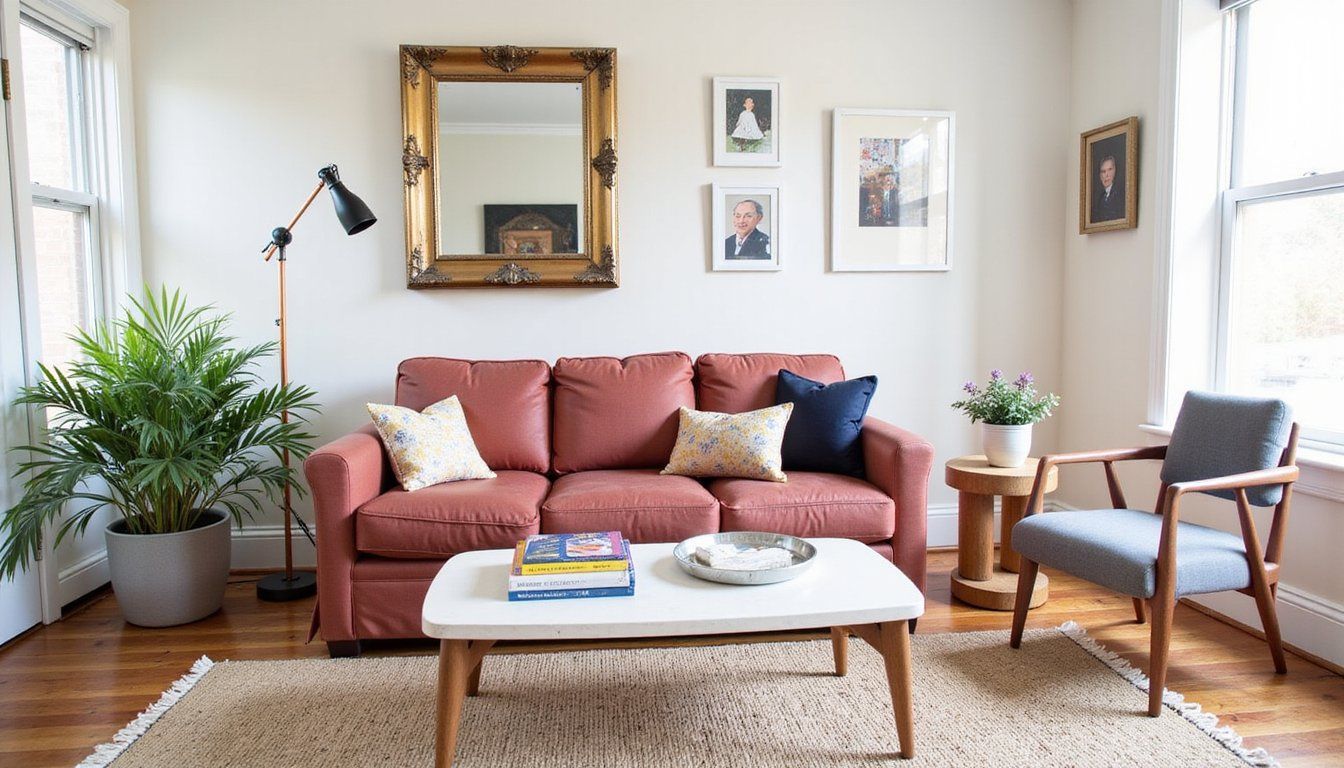
Start with the bones by focusing on secondhand larger pieces such as a sturdy sofa frame or a solid dining table, because investing time in repairing or reupholstering a well-made used piece stretches every dollar further.
Refinishing and reupholstery can transform a dated item into a farmhouse focal point: sanding and a fresh coat of chalk-style paint or swapping fabric for a neutral, textured cloth often costs a fraction of buying new and yields a custom result.
Mix old with new by pairing one thrifted anchor piece with simpler new items like inexpensive slipcovers or table linens, which softens the cost while maintaining a cohesive, lived-in look.
Scale and placement matter more than brand names, and arranging furniture to encourage conversation and warmth makes a small space feel curated and comfortable even without high-end pieces.
Textiles, Layers & Patterns
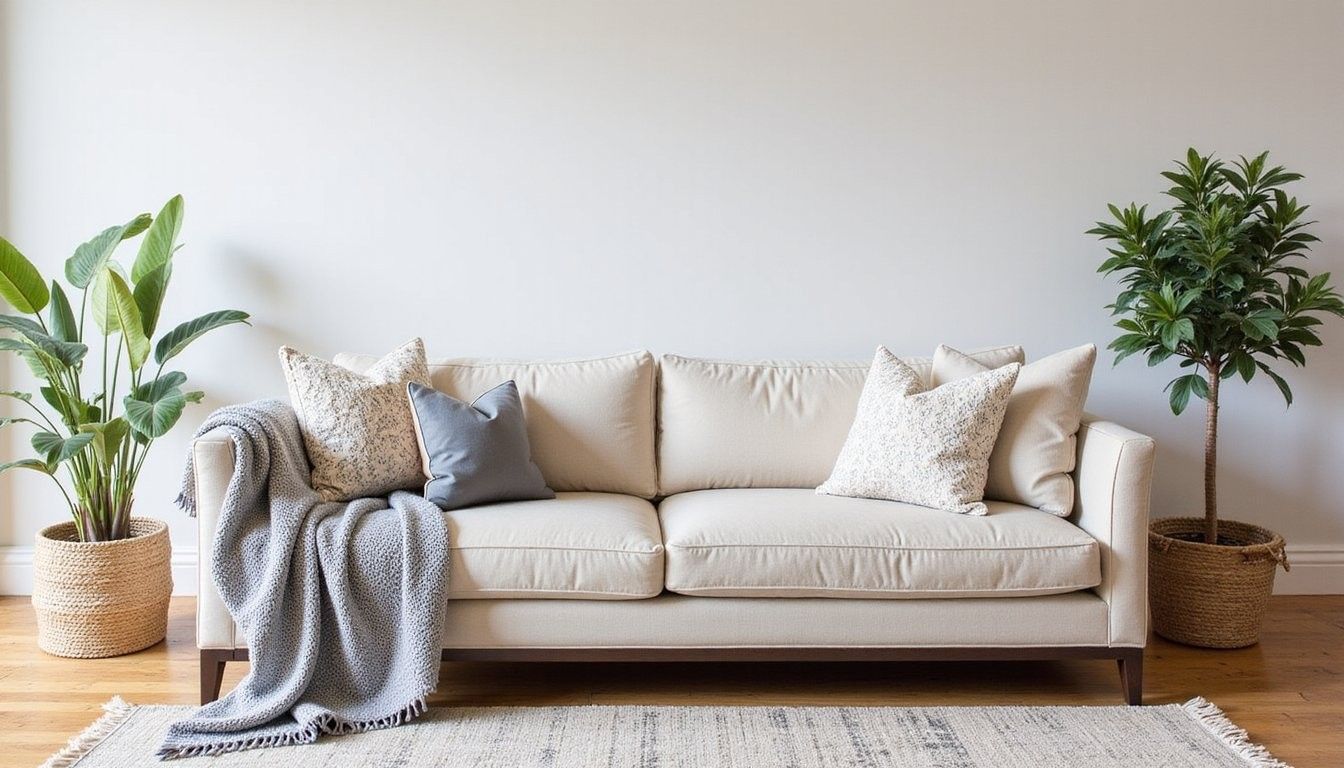
Layering soft textiles is the fastest route to a cozy farmhouse vibe; throws, cushions, and area rugs add texture and warmth while concealing imperfections in older furniture.
Choose natural textures like cotton, linen, and wool in muted stripes, checks, or small florals to achieve an authentic farmhouse mix, and select palette repeats to keep the look calm and unified.
Mix scales carefully by pairing a large striped rug with smaller patterned cushions to add visual interest without creating chaos, and rotate textiles seasonally to refresh the room at minimal cost.
DIY cushion covers from discounted fabric or thrifted tablecloths can mimic expensive patterns, and learning basic sewing skills opens a lot of affordable customization options for pillows and curtains.
DIY Accents and Upcycling
Small projects yield big charm when you repurpose crates, mason jars, and salvaged wood into lamps, shelves, and planters, which adds personality and reduces waste while keeping costs low.
Simple techniques like whitewashing wood, distressing paint edges, and swapping hardware can convert an ordinary piece into something that feels curated and intentional.
Functional decor such as repurposed drawers used as wall shelves or a ladder turned into a blanket rack brings storage and style together, proving that utility can be beautiful in this aesthetic.
Styling and Layered Vignettes
Curate small scenes on mantels, console tables, and kitchen islands by grouping items in odd numbers with mixed heights to achieve that collected-over-time look without spending a lot.
Choose anchor pieces like a large framed mirror or a vintage clock, then add lower-cost accents such as candles, greenery, and stacked books to create depth and storytelling in each vignette.
A well-styled vignette feels natural because it balances scale, color, and texture rather than matching every item perfectly.
Greenery and botanicals—even a few sprigs in a jar—bring life into rooms and cost almost nothing when planted from cuttings or grown from small starts.
Cost vs. Impact Comparison
Know where to spend by prioritizing a few focal pieces and using low-cost accents to amplify them, since targeted spending creates more perceived value than evenly distributed small purchases.
| Item | Typical Cost | Impact on Warmth |
|---|---|---|
| Large Sofa or Dining Table | Higher | High |
| Area Rug | Medium | High |
| Throws & Cushions | Low | High |
| Wall Art | Low | Medium |
Balance matters because a single well-placed splurge can anchor the room while affordable textiles and DIY accents complete the story without overspending.
Pro vs. Con: Ready-made vs. Vintage
Understand trade-offs between buying new mass-produced items and choosing vintage or thrifted finds, because each approach offers different benefits for budget and character.
| Approach | Pros | Cons |
|---|---|---|
| Ready-made | Consistent sizing, easy returns | Less character, may lack durable construction |
| Vintage/Thrifted | Unique pieces, often better build | Requires time and sometimes repair |
Combine both by using ready-made items for basics and hunting for vintage accents to inject personality without breaking the bank.
Budget Planner and Data Table
Track small wins by planning a modest budget and listing priorities; keeping a simple ledger prevents impulse buys and helps allocate funds where they matter most for creating warmth.
| Item | Estimated Cost | Priority |
|---|---|---|
| Sofa or Seating | $150 – $600 | High |
| Area Rug | $50 – $300 | High |
| Throws & Pillows | $10 – $80 | Medium |
| Lighting & Lamps | $20 – $150 | Medium |
| DIY Materials | $5 – $60 | Low |
Flexible budgeting lets you move money toward projects that will create the most comfort while pausing on non-urgent decorative purchases.
Quick Boolean: Worth Hunting For?
Decide fast when you find a possible thrifted piece by asking one or two quick questions about condition and potential, which saves time and avoids clutter from items you won’t actually revive.
| Question | Yes | No |
|---|---|---|
| Solid frame and structure? | ✔️ | ✖️ |
| Easily repairable finish? | ✔️ | ✖️ |
Trust a quick check and skip items that fail structural questions, since time and repair costs can quickly outweigh a bargain price.
What to Avoid
Avoid trend overload by not chasing every passing popular finish, since a few classic elements will keep a farmhouse look feeling timeless and easier to update through small swaps.
Resist impulse buys that create mismatch; saving for a single meaningful piece often yields a much cozier and more cohesive room than many random low-cost items.
Final Styling Checklist
Finish with intent by walking each room and asking if it invites you to sit, rest, and enjoy—this simple test reveals where an extra throw, lamp, or plant would truly improve comfort.
Less is often more in creating calm farmhouse rooms; edit mercilessly so every piece earns its spot by adding warmth, storage, or personality rather than visual noise.
Rotate seasonally to refresh spaces affordably by swapping cushion covers and small accents, which keeps rooms feeling new while using the same core pieces year after year.
Frequently Asked Questions
What if I have no space for large secondhand pieces? Look for compact options such as narrow console tables, stool-style seating, or wall-mounted shelving which deliver farmhouse character without consuming precious floor area and allow you to layer textiles and decor for warmth.
How do I make thrifted pieces look cohesive? Create unity by repeating a simple palette across rooms—neutrals with muted greens or soft blues—and refresh mismatched items with paint or consistent hardware to tie them into the same visual family.
Can I achieve a farmhouse look in an apartment with rules about painting? Yes; use removable solutions like slipcovers, peel-and-stick wallpaper on a single accent board, and freestanding textiles to evoke farmhouse charm without permanent changes.
Where are the best places to hunt for bargains? Try estate sales, local thrift stores on discount days, online marketplaces with local pickup, and community swap groups where people often rehome items quickly at low cost.
How do I avoid the overly kitschy farmhouse clichés? Focus on authentic textures, simple lines, and a few meaningful pieces rather than collecting themed accessories, and let a hint of worn patina tell the story instead of manufactured novelty items.
