
Hook & TL;DR
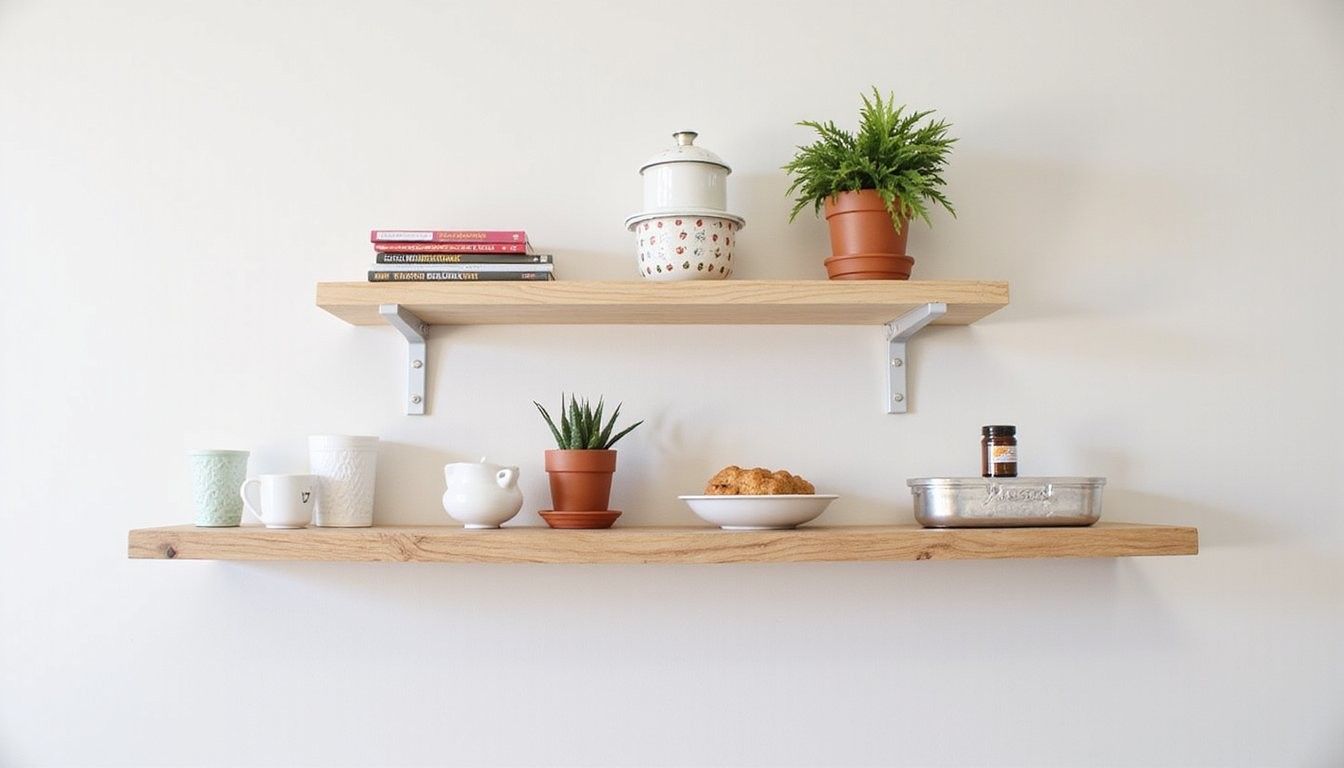
Quick win for your wall: Floating shelves give a clean, modern display that increases usable surface without bulky supports, and with a little planning you can install strong, elegant shelves in a weekend.
Key Takeaways
- Measure twice: Find studs and mark loads before cutting wood.
- Pick the right anchors: Use studs for heavy loads or rated wall anchors for hollow walls.
- Conceal supports: Create a pocketed shelf or use hidden bracket systems for a floating look.
- Finish carefully: Sand, stain or paint, and seal the shelf for lasting beauty.
Overview
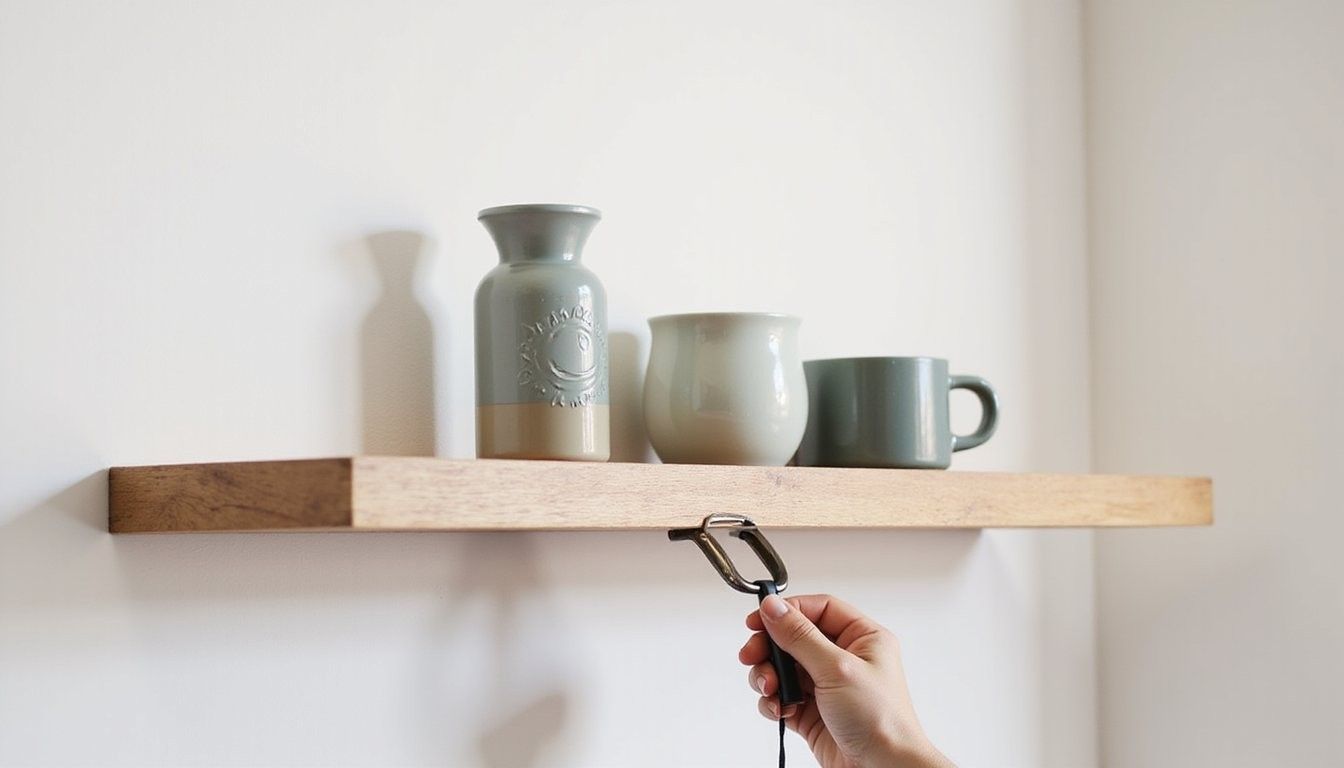
Why this approach works: A pocketed shelf or a hidden-bracket system transfers load to the wall structure while keeping the edge clean, so the shelf seems to hover without visible supports and holds everyday items safely.
What you will learn: Practical measurement strategies, a clear list of tools and materials, stepwise building and mounting notes, and finishing touches that keep the project looking professional.
Tools & Materials
- Power drill with bits — for pilot holes and anchor installation.
- Level and combination square — keeps shelves perfectly horizontal and square.
- Screwdriver or impact driver — for driving screws cleanly.
- Measuring tape and pencil — precise marks matter more than speed.
- Wood boards — choose solid wood or plywood depending on finish and load.
- Hidden bracket kit or steel rod supports — if you prefer ready-made hardware for strength.
- Wood glue, screws, and finishing nails — for secure joins and tidy edges.
- Sandpaper, stain or paint, and sealant — finishing makes the shelf last and look polished.
- Toggle anchors or heavy-duty wall anchors — for non-stud installations.
Measuring & Planning
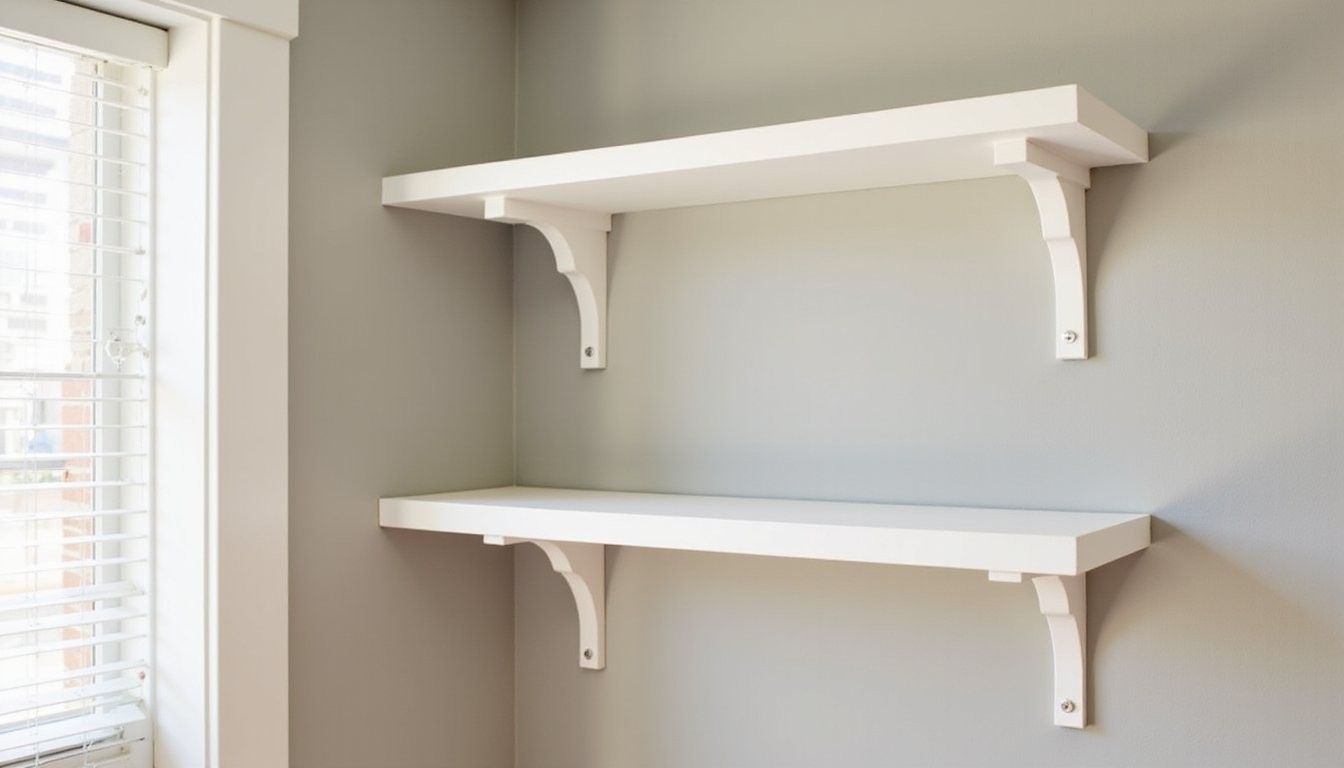
Start with the end in mind: Measure the intended wall area and note the distance to corners, windows and light switches so shelves fit the room proportions and do not conflict with electrical boxes or trim.
Locate studs early: Use a stud finder and confirm with a small pilot hole; when a stud is available, it is the strongest anchor point and makes the mount simpler and safer for heavier items.
Decide shelf depth and spacing: Typical depths range from 8 to 12 inches depending on use, and allow at least 12–26 inches vertical spacing between shelves to accommodate books, pots and decor while keeping sightlines clean.
| Shelf Depth | Typical Use | Approx Load Capacity (per linear foot) |
|---|---|---|
| 6-8 in | Small decor, frames | 10–20 lbs |
| 9-12 in | Books, small plants | 20–40 lbs |
| 12+ in | Appliances, heavy collections | 40+ lbs (requires stud mounts) |
Plan anchor spacing: For long shelves, plan supports at least every 16 to 24 inches or at studs to prevent sag over time and to share the load along the wall.
Building the Shelf Box
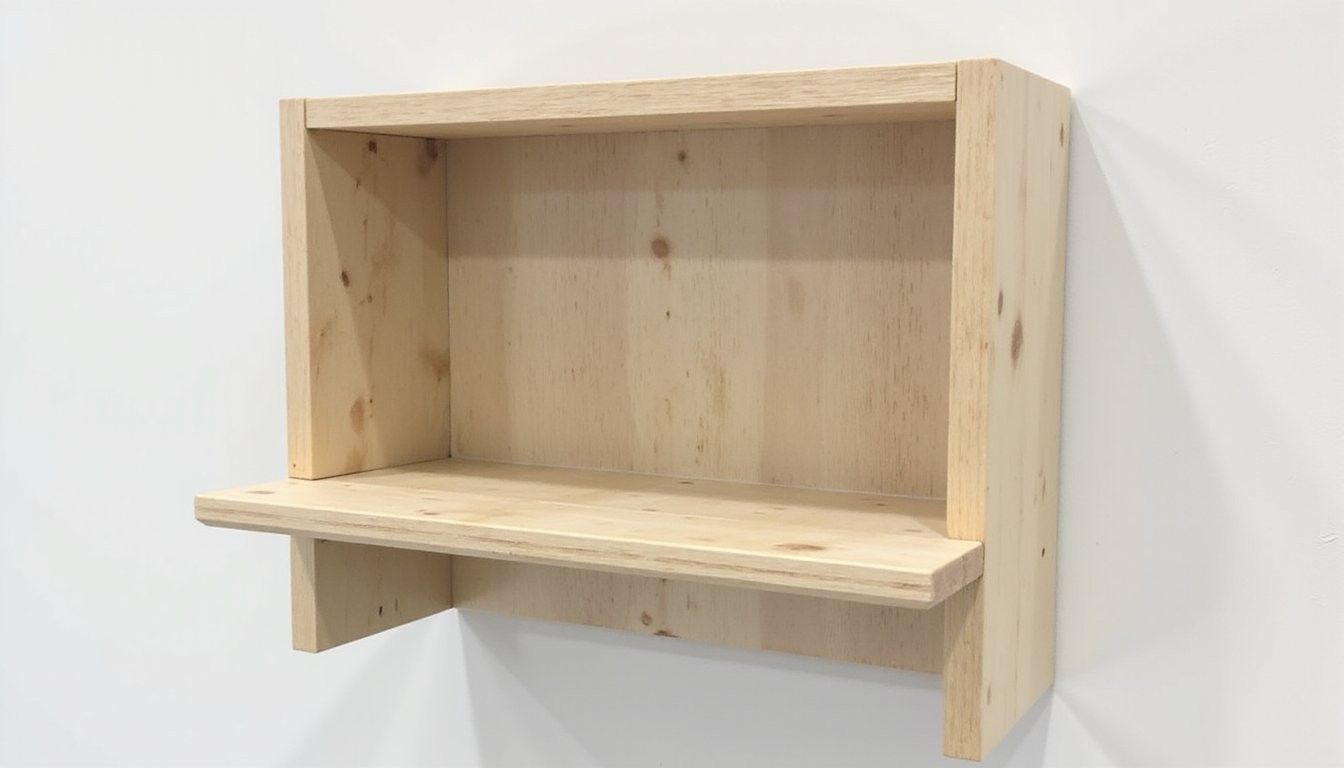
Choose your construction method: A pocketed box uses an internal cavity to slide over wall-mounted rods, while a box built around a steel bracket hides hardware and offers a very clean front edge.
Cut and join with care: Cut wood to exact length, use butt joints reinforced with glue and screws or rabbets for a tighter face, and sand edges smooth before finish to avoid visible gaps after mounting.
Add reinforcing if needed: For longer spans consider a hidden center cleat or interior stiffener to prevent visible bowing, and make sure internal hardware clearance matches your bracket dimensions.
| Method | Finish Look | Skill Needed |
|---|---|---|
| Pocketed box | Seamless front edge | Moderate |
| Bracket-wrapped box | Clean but simple reveal | Beginner to moderate |
Mounting & Finishing
Mount bracket or rod supports first: Use a level and a ledger board to mark anchor points, fasten to studs with long wood screws, or use rated anchors where studs are absent, and double-check level before fully tightening.
Slide shelf onto supports carefully: For pocketed designs slide the box over rods or brackets, confirm fit and then secure with screws from inside the cavity to prevent movement while keeping the exterior seamless.
Finish edges and surfaces: Fill any small holes with wood filler, sand progressively finer, apply stain or paint in thin coats, and seal with a clear topcoat for moisture resistance and easier cleaning.
| Step | Estimated Time | Why it Matters |
|---|---|---|
| Mount supports | 30–60 minutes | Ensures shelf carries intended load |
| Fit shelf | 15–30 minutes | Perfect fit keeps look seamless |
| Finish and seal | 1–2 hours plus drying | Protects and completes the look |
Styling & Weight Considerations
Balance style and function: Arrange items so heavier pieces sit near supports or toward the wall, mixing textures and heights to make each shelf feel curated while avoiding edge-heavy loads that stress the mount.
Mind total load per shelf: Calculate the weight of grouped items and keep heavier collections on lower shelves mounted into studs or on a separate furniture solution if the wall cannot safely carry them.
Visual calm matters: A spare arrangement that leaves negative space keeps the floating effect crisp and prevents overloading that can lead to sag or failure.
Common Mistakes
Test before styling: After installation, start with light items and check the mount after 24 hours to catch any movement before adding heavier pieces and reduce the chance of unnoticed issues causing damage later.
Frequently Asked Questions
Can I mount floating shelves on plaster walls? Plaster responds differently than drywall and often hides studs, so use a reliable stud finder or drill small test holes and choose anchors rated for plaster; when in doubt fasten into framing to be safe.
How much weight will a hidden-bracket shelf hold? Load capacity depends on bracket thickness, embedment into the stud and shelf depth, but a stout steel rod into studs can carry 50+ pounds per linear foot while hollow-wall anchors will support much less, so always refer to hardware ratings.
Is plywood a good choice for floating shelves? High-quality plywood is stable and resists warping more than cheap solid boards, and it takes finishes well, so for longer spans plywood faced with a hardwood veneer often gives the best mix of strength and appearance.
What finish should I use in kitchens? In a kitchen choose a durable, water-resistant finish such as a polyurethane or conversion varnish for wood surfaces and allow full cure time before placing items to avoid sticking or finish marks.
How do I hide small gaps at the front edge after mounting? Minor gaps can be masked with a thin bead of matching colored caulk or a very small strip of wood trim glued into place, then sanded and finished so the edge reads as continuous rather than patched.
