
The Myth

Everyone says you need custom cabinetry to make a closet feel high end but most people accept that cost without questioning whether there are lower cost paths to a polished look.
That belief sends homeowners straight to expensive contractors and often leads to oversized budgets and months of waiting when a few smart changes could produce a fresh, tidy closet in a weekend.
The Truth
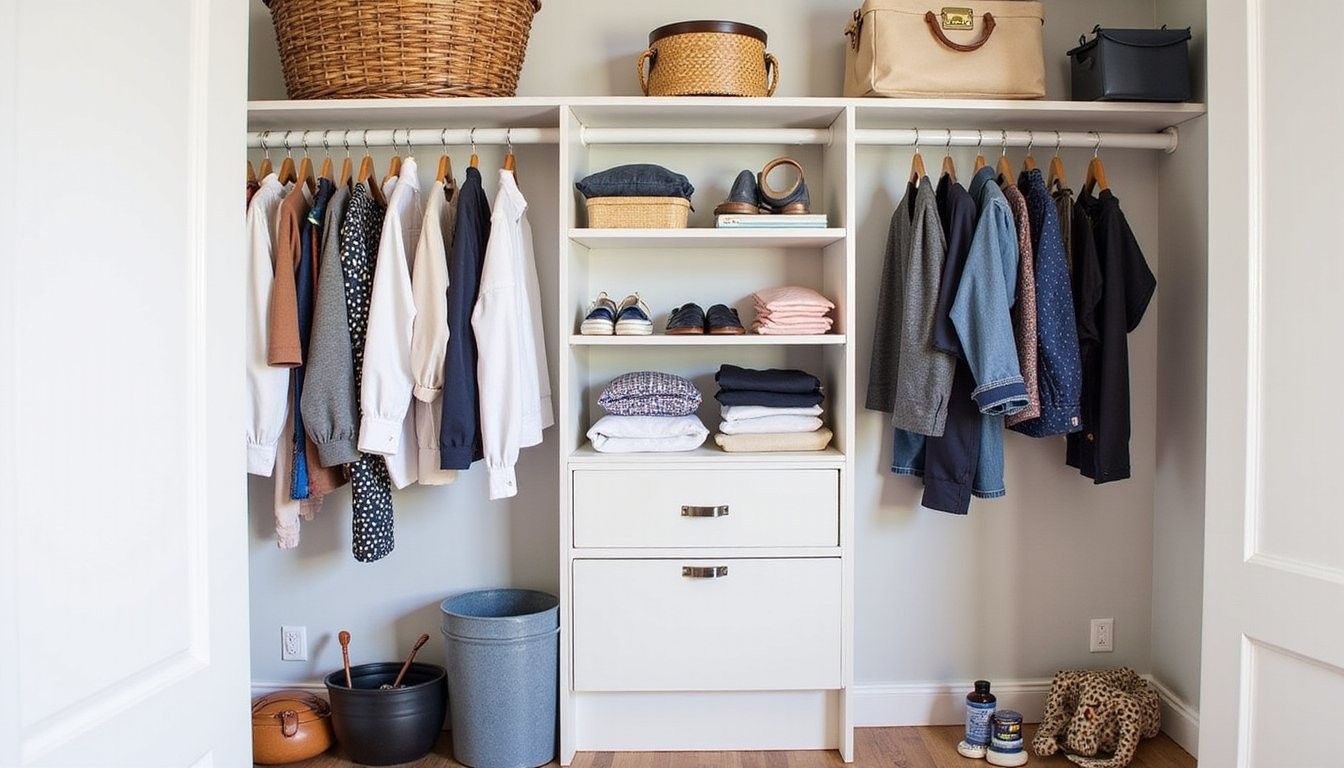
You can achieve a neat, stylish closet for a fraction of the cost by combining DIY shelving, clever storage containers, and a simple layout that prioritizes access and visibility.
Small upgrades like floating shelves, tension rods, and labelled baskets change how the space functions and make daily routines faster while keeping the total spend low and achievable in a single weekend.
Myth-Buster Box
Reality: Thoughtful DIY shelving, smart storage choices, and careful planning can produce a finished and highly usable closet without breaking the bank.
Getting Started
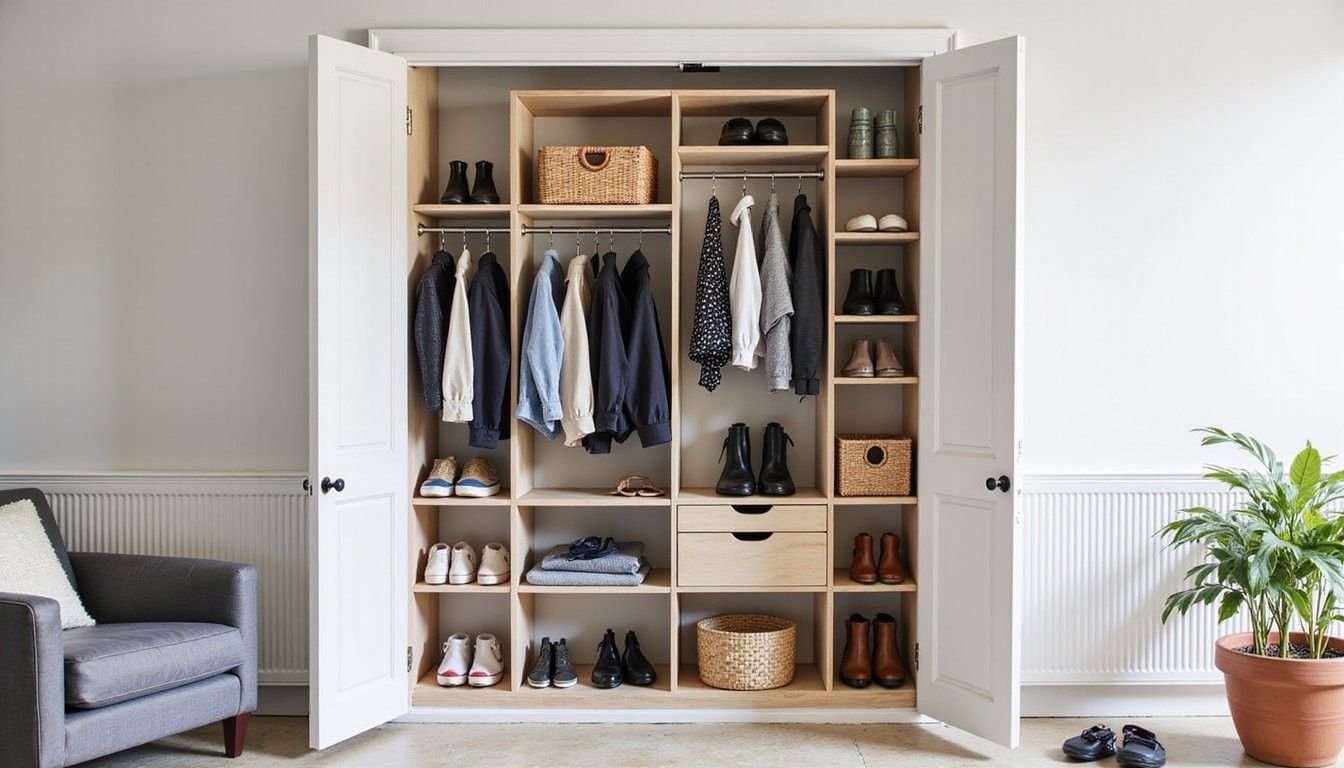
Start with a clear out and a simple plan because removing items you no longer wear or use gives an immediate sense of space and makes it easier to design shelving that matches real needs rather than imagined ones.
Measure carefully and sketch the layout on paper or a phone photo to define where shelves, rods, and baskets will go so you avoid wasted cuts or misplaced anchors during install.
Tools & Materials
- Tape measure – precise measurements prevent errors and save money on materials.
- Level and stud finder – ensure shelves are straight and anchored to solid support when possible.
- Drill, screws, and wall anchors – chosen to match wall type for secure fastening of shelving brackets and hardware.
- Wood boards or pre-cut shelving – select affordable pine, plywood, or MDF based on finish plans and budget.
- Brackets, tension rods, and hooks – mix and match hardware types to create a layered storage system that solves multiple needs.
- Storage bins, baskets, and slim hangers – unify the look and make items easy to grab while keeping clutter hidden.
Plan and Measure
Planning reduces surprise expenses and wasted materials because you can prioritize which areas need shelving, which need hanging, and which are fine for bins based on how you use the space day to day.
Map zones for daily wear, seasonal items, and accessories and set shelf heights to match specific pieces like boots, sweaters, or storage boxes so every shelf serves a purpose rather than collecting dust.
DIY Shelving Options
Floating shelves made from simple boards give a clean, modern look at low cost and can be finished with paint or stain to match room trim for a unified appearance without pricey carpentry.
Adjustable shelving using standards and brackets offers flexibility as needs change and lets you add or remove shelves without new drilling, which helps the closet evolve over time as wardrobes shift.
Repurposed furniture like small bookcases or cubbies can be anchored in place to create instant storage with character and minimal construction work, often for lower money than custom builds.
Organization Systems and Styling
Layer storage types to handle different items with ease by pairing a top shelf for boxes, mid-level hanging for daily pieces, and lower cubbies or baskets for shoes and accessories so each item has a home.
Use uniform containers and slim hangers to reduce visual clutter and make the space feel larger because consistent textures and shapes help the eye read the closet as intentional rather than chaotic.
Place frequently used items at eye level and seasonal items up high so daily routines become effortless and the low-cost system feels thoughtfully curated rather than thrown together.
Small Closet Tricks for Big Effect
Use the back of the door and narrow vertical spaces for hanging accessories to reclaim inches that often go unused, turning wasted area into convenient storage for scarves, belts, or handbags.
Install a second hanging rod where height allows to double hanging capacity for shirts and pants without sacrificing shelf space, making the most of tall walls without new cabinetry.
Keep a slim step stool nearby for top shelf access so you can use high shelves for boxes safely and confidently rather than leaving them empty out of convenience concerns.
Budget Breakdown and Comparison
Compare low, mid, and higher spend plans to choose what fits your timeline and comfort with DIY because clarity about cost helps prevent creeping purchases and keeps the project within a set target.
Invest where the return is felt daily, such as hangers, lighting, and a sturdy top shelf while saving on decorative trims that do little for function, to make money go where it improves use most.
| Option | Estimated Cost | Durability | Daily Effect |
|---|---|---|---|
| Basic DIY (boards, brackets, bins) | $50 – $200 | Moderate | High |
| Prefabricated Closet Kits | $200 – $800 | Good | Very High |
| Custom Built-ins | $1,000+ | Excellent | Very High |
Pro vs Con Table
Weigh quick installations against long term stability when picking a method to match your tolerance for weekend projects versus patience for stronger anchored solutions that take more planning.
| Approach | Pros | Cons |
|---|---|---|
| Simple Shelves | Low cost, fast to install | Less load capacity than built-ins |
| Adjustable Systems | Flexible for changing needs | Initial kit cost higher than raw boards |
| Custom Carpentry | Best fit and load support | Most costly and time consuming |
Installation Tips
Anchor into studs when possible to avoid sagging and keep shelves secure because drywall anchors can work for light loads but steady brackets tied to framing deliver the best longevity for heavy items.
Pre-finish boards before fitting them into place to save time and avoid drips onto clothes since painting or staining flat on sawhorses gives a neater result and protects the closet interior from mess.
What to Avoid
Common Troubles and Fixes
Shelves that sag are usually under-supported or made from thin material and can be fixed by adding a central bracket, switching to thicker boards, or using a credenza or small dresser as a lower shelf to share weight.
Poor lighting makes even a tidy closet feel chaotic so add battery LED strips or a stick-on puck light to brighten dark corners and reveal true color, which simplifies outfit choice and grooming.
Maintenance and Upkeep
Carry out a seasonal edit every few months to keep the system working well and move items to donation, repair, or storage if they are no longer used, which prevents slow re-cluttering of a newly organized closet.
Wipe down shelves and rotate boxes to prevent dust build-up and crush marks so that storage stays clean and materials last longer, making the initial investment stretch further over time.
FAQ
How do I measure for shelving? Measure width, height, and depth of the closet and note where studs, switches, or vents exist so you can place shelves in practical zones and avoid obstacles while installing brackets.
What is the most budget friendly shelving material? Unfinished pine boards or plywood cut to size are often the most economical choice and take paint or stain well, allowing a polished finish without high cost.
Can I install shelving without drilling into studs? Yes, light-duty shelves can be attached with high quality wall anchors, but for heavy loads or long spans it is safer to hit studs or add vertical supports to carry the weight.
How do I make a small closet feel larger? Use light paint tones, consistent containers, and slim hangers while keeping the floor clear and choosing open shelving over closed bulk where possible to give the impression of space.
Are adjustable shelving systems worth the price? Adjustable systems cost more up front but offer flexibility as needs change, which reduces the chance of a full redo and can be a smart trade when you expect storage needs to shift.
