
Hook & TL;DR
Start small and transform your home one category at a time — KonMari turns tidying into a mindful practice that leaves you with only the items that spark joy, clearer surfaces, and easier daily routines.
Key Takeaways
- Declutter by category: follow the KonMari sequence for focus and momentum.
- Spark joy test: choose items that bring positive feeling, not guilt or habit.
- Work room by room: use a clear checklist to avoid overwhelm and finish faster.
- Keep routines: simple maintenance keeps spaces tidy without constant effort.
Introduction
KonMari is more than storage tricks because it asks you to notice how items make you feel and then make deliberate choices about what stays in your home.
Begin with the right mindset by committing to finish a session rather than moving randomly between tasks, which makes progress visible and satisfying.
Tools & Materials
- Large clear bins or boxes: to hold items you are sorting and to separate keep, donate, recycle, and discard piles.
- Trash bags: for broken items and things that cannot be donated so they are removed quickly.
- Donation boxes: labeled containers to make donating painless and intentional.
- Timer or phone: to set focused intervals that prevent burnout and help track time spent per category.
- Notebook or checklist printout: to record decisions and note items to replace or repair later.
Getting Started: The KonMari Mindset
Commit to finishing a category: starting with clothes then moving to books, papers, komono (miscellaneous), and sentimental items gives a clear, manageable order that builds decision-making stamina.
Pause and feel: pick up each item and notice the reaction; a positive pull means keep, a neutral or negative feeling means let go.
Hold each item in your hands: physical contact helps you make honest choices faster and reduces indecision about items you rarely use.
Room-by-Room Checklist
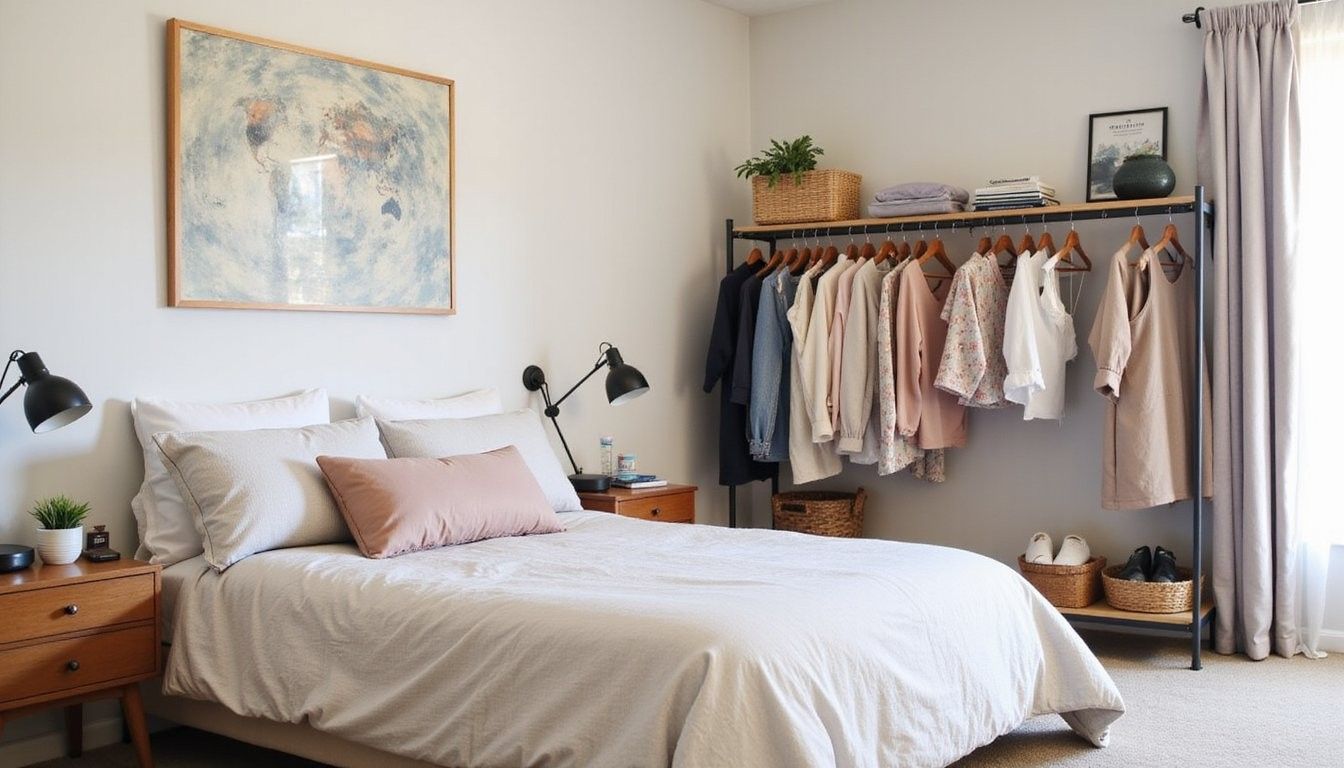
Bedroom — start with clothes: pull every garment from drawers and closets, touch each piece, and ask if it sparks joy before returning it neatly or placing it in the donate pile.
Closet — shoes, accessories, bags: treat shoes and bags as a category and evaluate condition and frequency of use; damaged items that don’t bring joy should be recycled or repaired if truly loved.
Kitchen — pantry and dishes: clear countertops, gather duplicate gadgets and single-purpose tools, and keep only what you use and enjoy while donating duplicates to reduce clutter and simplify meal prep.
Living room — decor and media: sort books, magazines, electronics, and decorative items; keep pieces that reflect your life now and store or let go of things kept from past needs or obligations.
Bathroom — toiletries and linens: check expiration dates, consolidate duplicates, and create a small, visible daily kit so morning routines are smoother and surfaces stay clear.
Home office — papers and cords: sort active documents from archives, digitize where possible, and label a small number of folders for action, reference, and memorabilia to prevent stacks from forming.
Kids’ rooms — toys and clothes: invite children to participate with age-appropriate choices and limit toys to favorites, keeping rotation boxes to maintain novelty without overwhelming the space.
Entryway and mudroom — daily gear: corral shoes, bags, and outerwear with hooks, trays, and a routine drop zone so clutter doesn’t migrate into the house.
| Room | Primary Category | Estimated Time |
|---|---|---|
| Bedroom | Clothes | 1–3 hours |
| Closet | Accessories | 1–2 hours |
| Kitchen | Dishes & Gadgets | 2–4 hours |
| Living Room | Media & Decor | 1–3 hours |
Folding & Storage Techniques
Vertical folding saves space: fold shirts, socks, and pants into neat rectangles and store them standing up so every item is visible and easy to retrieve without disturbing the pile.
Group like with like: store by type and then by color or frequency of use so decisions are fast and daily dressing feels effortless.
Label subtly for clarity: labels help family members return items correctly while keeping surfaces clean, but keep labels minimal to preserve a calm look.
Maintenance & Simple Routines
Daily five-minute tidy: spend a few minutes each evening returning items to their places to prevent buildup and protect your progress from a single busy day undoing it.
Seasonal refresh: at the start of each season, remove and reassess seasonal clothing and gear so storage reflects current life and frees up space for what you actually use.
Small habits matter: a habit of one quick action per day keeps the home livable and reduces the need for long, exhausting sessions.
Common Mistakes
Skipping the spark joy check: deciding by utility alone or sentimental obligation can keep clutter masquerading as practical choices, so touch items and make feelings-based decisions when possible.
Rushing through donations: failing to remove items promptly from the home invites second-guessing, so schedule a drop-off or pick-up within a few days to finalize your choices.
Quick Comparisons & Checklist Summary
Balance time and impact: some rooms take longer but deliver big quality-of-life gains, while small quick wins support momentum and visible results.
| Cost vs Impact | Low Cost (Time/Tools) | High Impact |
|---|---|---|
| Entryway tidy | 30 minutes, minimal tools | Daily ease and reduced clutter migration |
| Kitchen purge | 2–4 hours, donation boxes | Simpler cooking and fewer duplicate purchases |
| Pro vs Con | Pros | Cons |
|---|---|---|
| KonMari approach | Creates long-term clarity and mindful ownership | Can feel intense when starting and may need time |
| Quick Wins Table | Yes | No |
|---|---|---|
| Clear a countertop | ✔ | |
| Sort all sentimental items | ✔ |
Frequently Asked Questions
How long will it take to KonMari my whole home? Time varies by household size and clutter level, but plan multiple focused sessions rather than a single marathon and you will make steady, lasting progress.
Do I have to keep everything I love? Keep items that genuinely spark joy and serve your current life, and consider donating things that belonged to past chapters to create space for what matters now.
What about sentimental items I can’t decide on? Treat sentimental items last because decision skills build through earlier categories, and handle each item with respect while noting that some memories live in you rather than an object.
Can the whole family participate? Yes, involve family members with their own categories and shared spaces, set clear roles, and keep expectations realistic so everyone learns lasting habits without pressure.
