
Best multifunctional furniture for small spaces: sofa beds, fold-down desks, and more

The Struggle
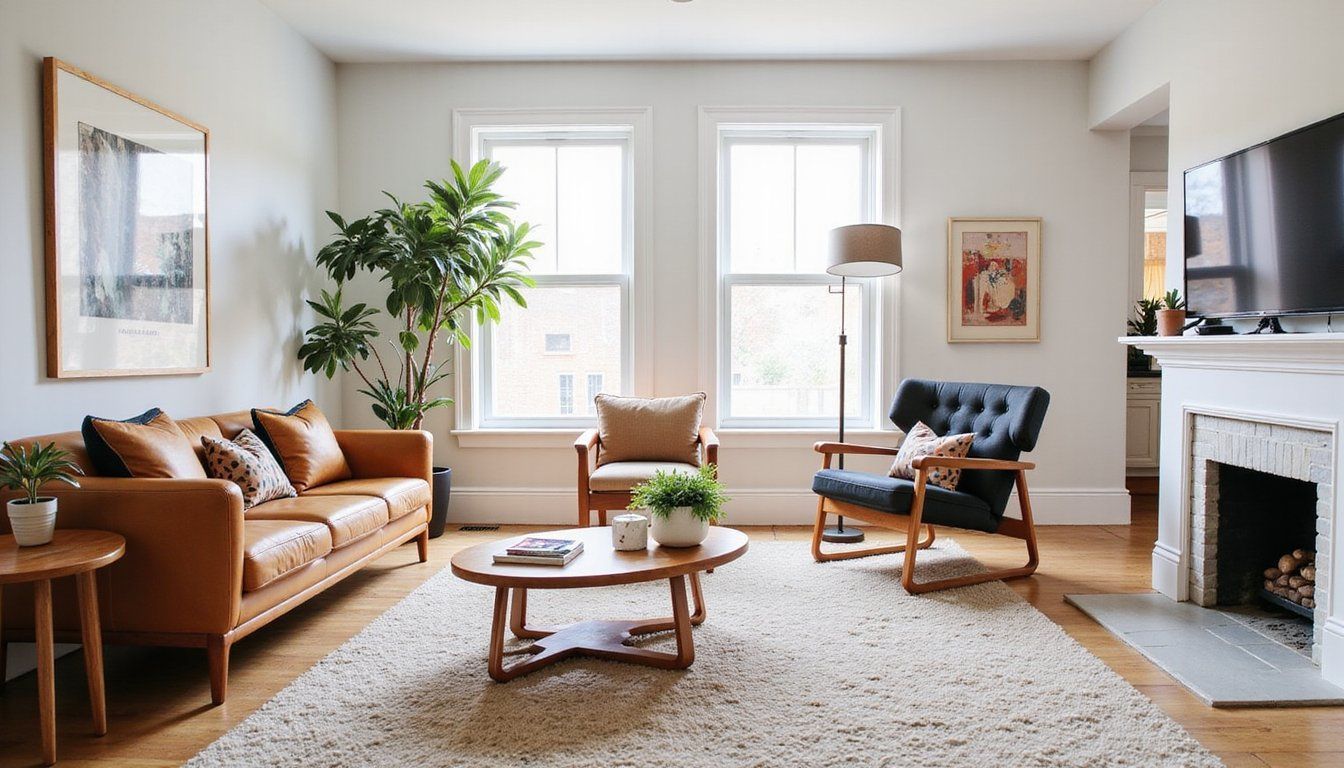
Cramped rooms can feel suffocating. When a living area must double as an office, a guest room, and a relaxation spot, clutter grows and calm disappears.
The Quick Fix
Choose pieces that change function without changing footprint. A mix of sofa beds, drop-down desks and smart storage layers the uses of each square foot so a small space behaves like a roomy home.
Finding the right gear can feel overwhelming. Many shoppers buy bulky items that work for one task but steal space and style when another use is needed.
There is a better path forward. By selecting a few carefully chosen multifunctional pieces and placing them thoughtfully, you can restore flow and calm without sacrificing comfort.
Start Here
Begin with a clear goal for each zone in your home. Define how many people use each area, how often guests stay over, and the activities you need to support so purchases solve real needs rather than create compromises.
Measure carefully before you shop. Recording door swings, walkways and ceiling height prevents surprises and ensures chosen pieces fit and function as intended.
Think about daily routines, not just looks. A pretty solution that slows you down will lose appeal fast, while a slightly less ornamental option that streamlines tasks will be used and enjoyed every day.
Tools & Materials
- Measuring tape — record width, depth and clearance in centimeters or inches.
- Floor plan or sketch — simple lines showing walls, windows and doors help visualize placement.
- Furniture pads or sliders — protect floors when moving pieces in small areas.
- Anchors and wall studs finder — required for safe wall-mounted desks or fold-down beds.
- Soft furnishings — slipcovers, cushions and rugs to harmonize mismatched multifunctional items.
- Lighting plan — portable lamps, wall lights or mounted fixtures to support changed room uses.
Sofa Beds
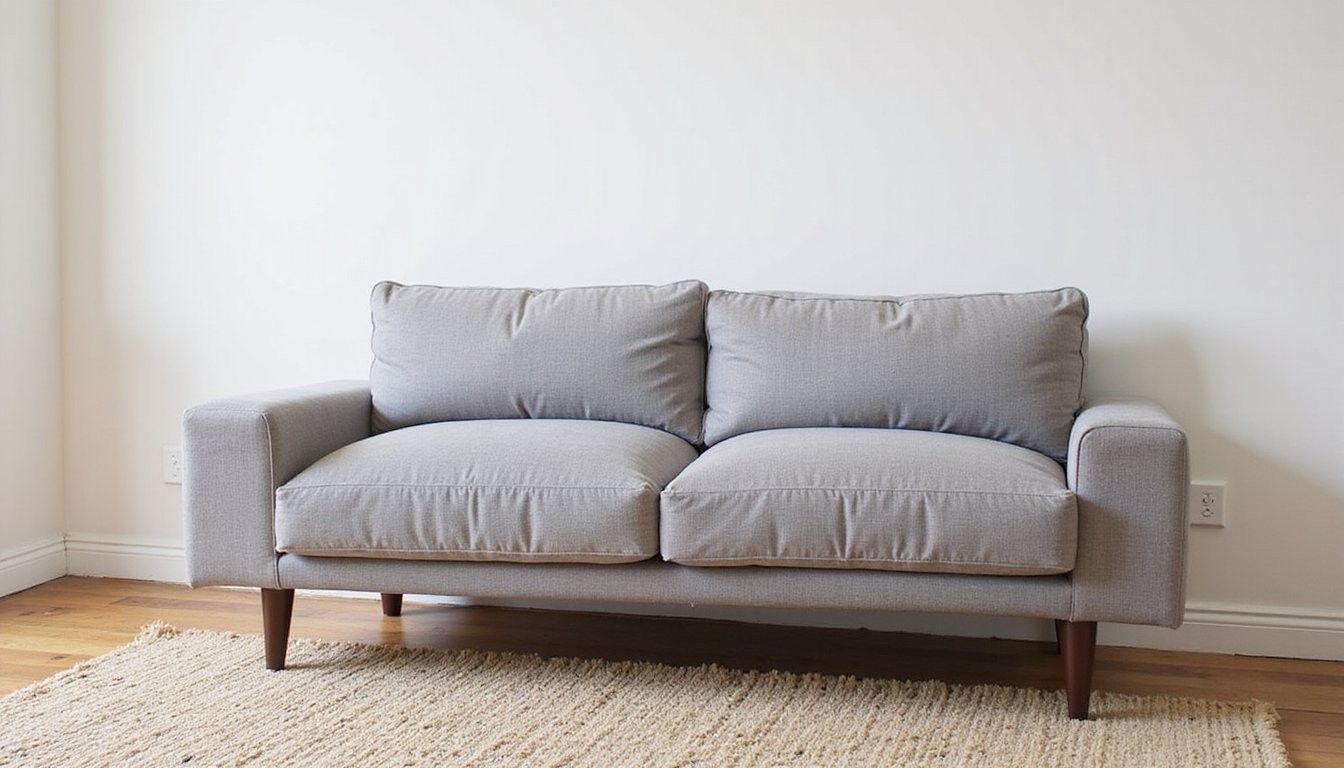
Modern sofa beds are far from clunky relics. Mechanisms have improved so many models look like sofas first and hidden beds second, which keeps living areas feeling polished even when the spare bed is used nightly.
Pick the right mattress option for comfort and longevity. Foam cores save weight and fold cleanly, while innerspring or hybrid mattresses often provide hotel-like support but add bulk and weight to the frame.
Consider the mechanism as much as the upholstery. Pull-out frames, click-clack backs and fold-flat designs each demand different clearance and have distinct maintenance needs, so match mechanism type to your room constraints and frequency of use.
Think about storage integration. Models with built-in storage under the seat or removable cushions help tidy bedding and reduce the need for extra cupboards, which is a big win when floor area is at a premium.
Style choices can hide function. Neutral fabrics, low-slung frames and consistent leg finishes help a convertible piece blend into a living room design rather than announce itself as temporary furniture.
Fold-Down Desks
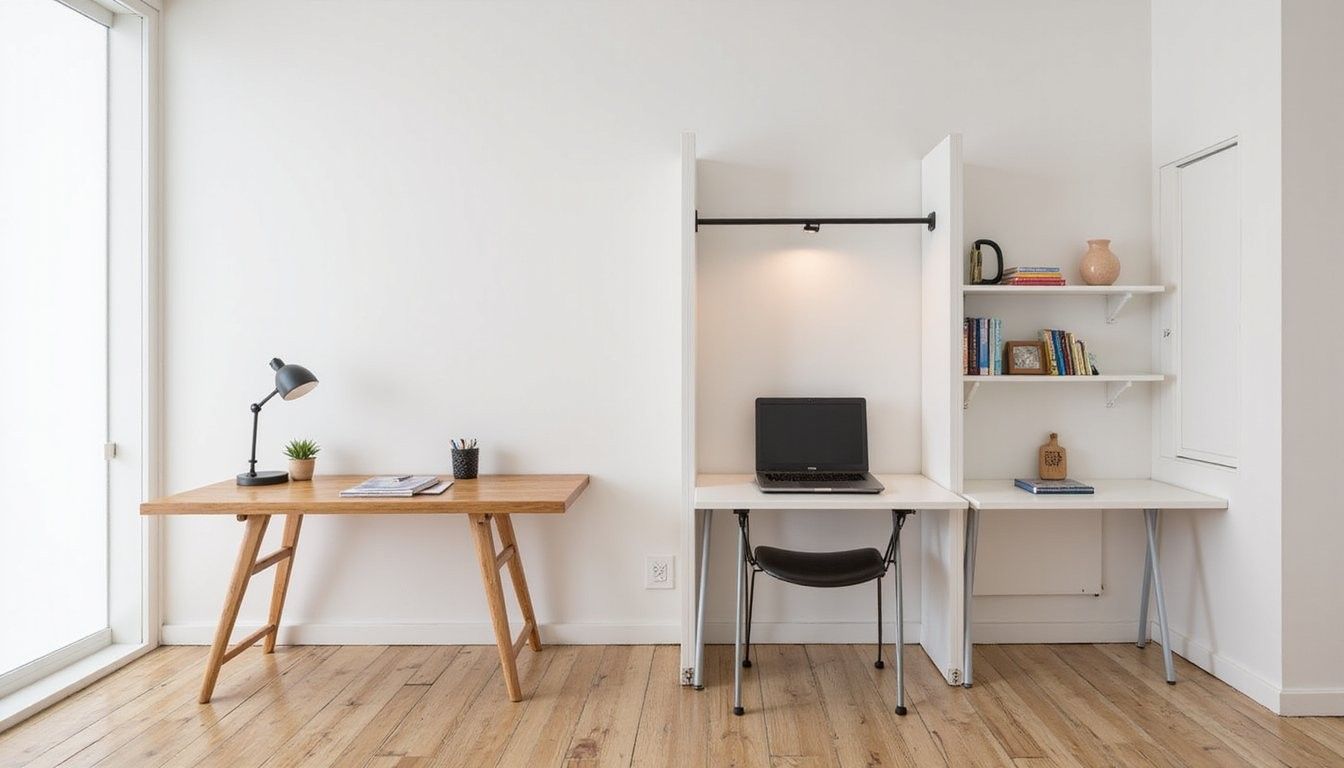
Fold-down desks free wall space for other uses when work is done. They convert a corridor, alcove or unused wall into a focused workspace that tucks away in seconds, keeping living areas serene during off hours.
Function and ergonomics should guide placement. Mount the desk at a comfortable elbow height, check lighting for video calls, and leave clearance for a supportive chair to slide in and out smoothly.
Choose storage cleverly to keep clutter off the surface. Integrated shelves, small cubbies and a cable channel for chargers make the workspace ready each time you open it, which preserves the tidy look that small spaces depend on.
| Feature | Benefit |
|---|---|
| Fold-flat top | Clears the wall for seating or play when closed |
| Hidden shelving | Keeps supplies organized and out of sight |
Durability matters in frequent-use zones. Choose hardware rated for repeated opening and closing, and prefer finishes that tolerate fingerprints and light spills for cleaner upkeep with minimal effort.
Smart Storage & Multi-Use Tables
Storage is the secret weapon for small spaces. Built-in units, benches with lift tops and nested tables keep essentials accessible while hiding visual clutter that shrinks perceived room size.
Multi-use tabletops can perform many roles. Dining, work, hobby and serving surfaces that expand or stack on demand reduce the need for single-purpose furniture and create flexible zones for different parts of the day.
Assess the trade-offs between footprint and flexibility. A drop-leaf table offers evening dining with a minimal footprint during the day, while a large central table that must stay open eats into circulation and can overwhelm tight plans.
| Cost | Impact on Space |
|---|---|
| Low | Small impact when paired with slim storage |
| Medium | Balanced flexibility and presence |
| High | High quality and multifunction but larger footprint |
Use vertical space intentionally. Tall shelving, wall hooks and rail systems move storage up out of the traffic zone and create zones without adding bulky low furniture.
Choosing & Styling
Focus on scale and consistent finishes first. Compact pieces with lighter materials and matching metal or wood tones create a sense of continuity that helps a small space read larger and calmer.
Layer texture to add depth without clutter. A textured rug, a few cushions and a single statement lamp anchor the room while keeping the visual field uncluttered and intentional.
Balance hidden function with visible design. Select a few items that reveal their usefulness proudly, like an elegant sofa bed frame or a sculptural fold-down desk, and keep storage hidden where it would feel messy.
Design clarity makes multifunction feel effortless. When furniture choices match your daily life and the room stays simple, switching from work to rest becomes a small ritual instead of a chore.
Test textiles for maintenance needs. If a piece will handle pets, children or frequent use, prefer durable, stain-resistant fabrics that clean easily so your multifunction furniture looks good for longer.
Common Mistakes
Buying purely for aesthetics can backfire. A beautiful sofa that does not open easily or a desk placed without considering light will sit unused and waste space.
Overlooking access and clearance is costly. Doors, radiator grills and window openings must remain reachable when a piece is opened or extended to avoid repeated reorganization.
Failing to factor in maintenance shortens furniture life. Choose finishes and mechanical parts that stand up to the rhythm of your household to avoid early replacement and frustration.
Frequently Asked Questions
Can a small sofa bed be comfortable for nightly use? Yes, many contemporary options offer supportive foam or hybrid mattresses and solid mechanisms designed for regular use so you can sleep well without committing to a separate guest room.
Are wall-mounted desks sturdy enough for full-time work? When anchored into studs and fitted with quality hardware, fold-down desks can be as stable as freestanding units and are a smart way to reclaim floor area while maintaining a productive workspace.
How do I choose between integrated storage and freestanding units? Integrated storage saves footprint and creates a built-in look, while freestanding pieces allow flexibility for future layouts, so weigh permanence against the likelihood of moving or changing functions.
What is the best flooring protection when moving multifunctional pieces? Felt pads or sliders prevent scratches and make rearranging easier, and a low-pile rug under active zones improves acoustics while protecting surfaces.
How to keep a multifunctional space feeling calm? Limit color palette, maintain a daily tidy habit and store items in labeled containers so each activity has a deliberate place and the room transitions smoothly between uses without visual noise.